

My role

My role

Lead product designer

Lead product designer

Lead product designer

Timeline

Timeline

8-week sprint: UX redesign & retail extension

8-week sprint: UX redesign & retail extension

Team & collaboration

Team & collaboration

Worked closely with product manager & engineers

Worked closely with product manager & engineers

Platform

Platform

Web + Mobile

Web + Mobile

The Problem

Despite strong growth, FidoAlert’s core user flows weren’t optimized for real-world urgency. Users struggled to:

  • Quickly send a lost pet alert

  • Manage or update pet profiles

  • Understand next steps in the process

This created confusion during a critical moment when speed and clarity are essential, leading to hesitation and increased risk of user drop-off at critical steps.

Business Goals

In addition to improving user experience, the team was preparing to launch in retail stores. The business needed a product experience that could:

  • Support a “tag-first” model to enable in-store purchases and seamless digital onboarding

  • Increase user retention by improving pet management flows and encouraging ongoing engagement

  • Simplify confusing UI patterns to reduce user friction and increase successful task completion

  • Ensure the platform can scale to millions more users smoothly as the network grows

The Problem

Despite strong growth, FidoAlert’s core user flows weren’t optimized for real-world urgency. Users struggled to:

  • Quickly send a lost pet alert

  • Manage or update pet profiles

  • Understand next steps in the process

This created confusion during a critical moment when speed and clarity are essential, leading to hesitation and increased risk of user drop-off at critical steps.

Business Goals

In addition to improving user experience, the team was preparing to launch in retail stores. The business needed a product experience that could:

  • Support a “tag-first” model to enable in-store purchases and seamless digital onboarding

  • Increase user retention by improving pet management flows and encouraging ongoing engagement

  • Simplify confusing UI patterns to reduce user friction and increase successful task completion

  • Ensure the platform can scale to millions more users smoothly as the network grows

The Problem

Despite strong growth, FidoAlert’s core user flows weren’t optimized for real-world urgency. Users struggled to:

  • Quickly send a lost pet alert

  • Manage or update pet profiles

  • Understand next steps in the process

This created confusion during a critical moment when speed and clarity are essential, leading to hesitation and increased risk of user drop-off at critical steps.

Business Goals

In addition to improving user experience, the team was preparing to launch in retail stores. The business needed a product experience that could:

  • Support a “tag-first” model to enable in-store purchases and seamless digital onboarding

  • Increase user retention by improving pet management flows and encouraging ongoing engagement

  • Simplify confusing UI patterns to reduce user friction and increase successful task completion

  • Ensure the platform can scale to millions more users smoothly as the network grows

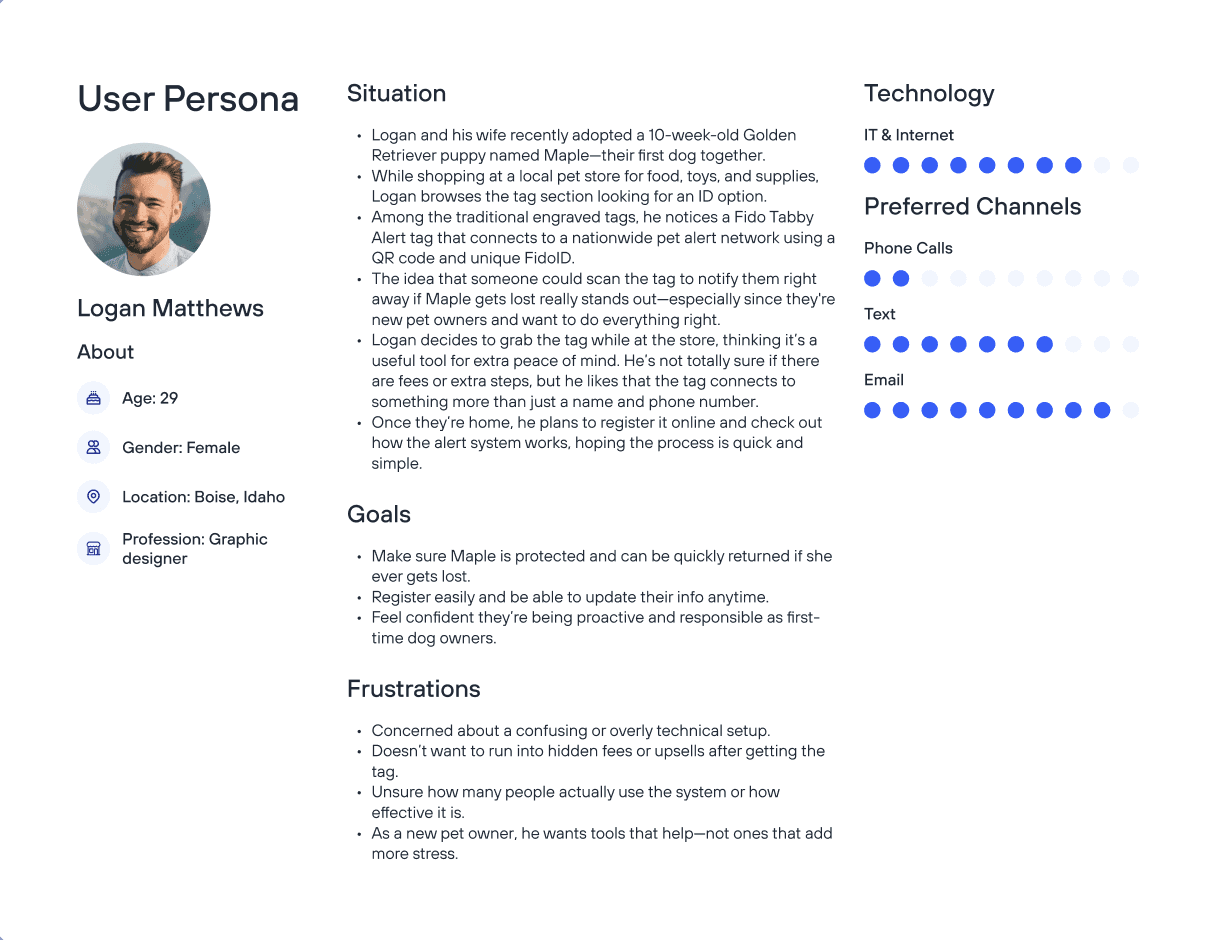
User personas

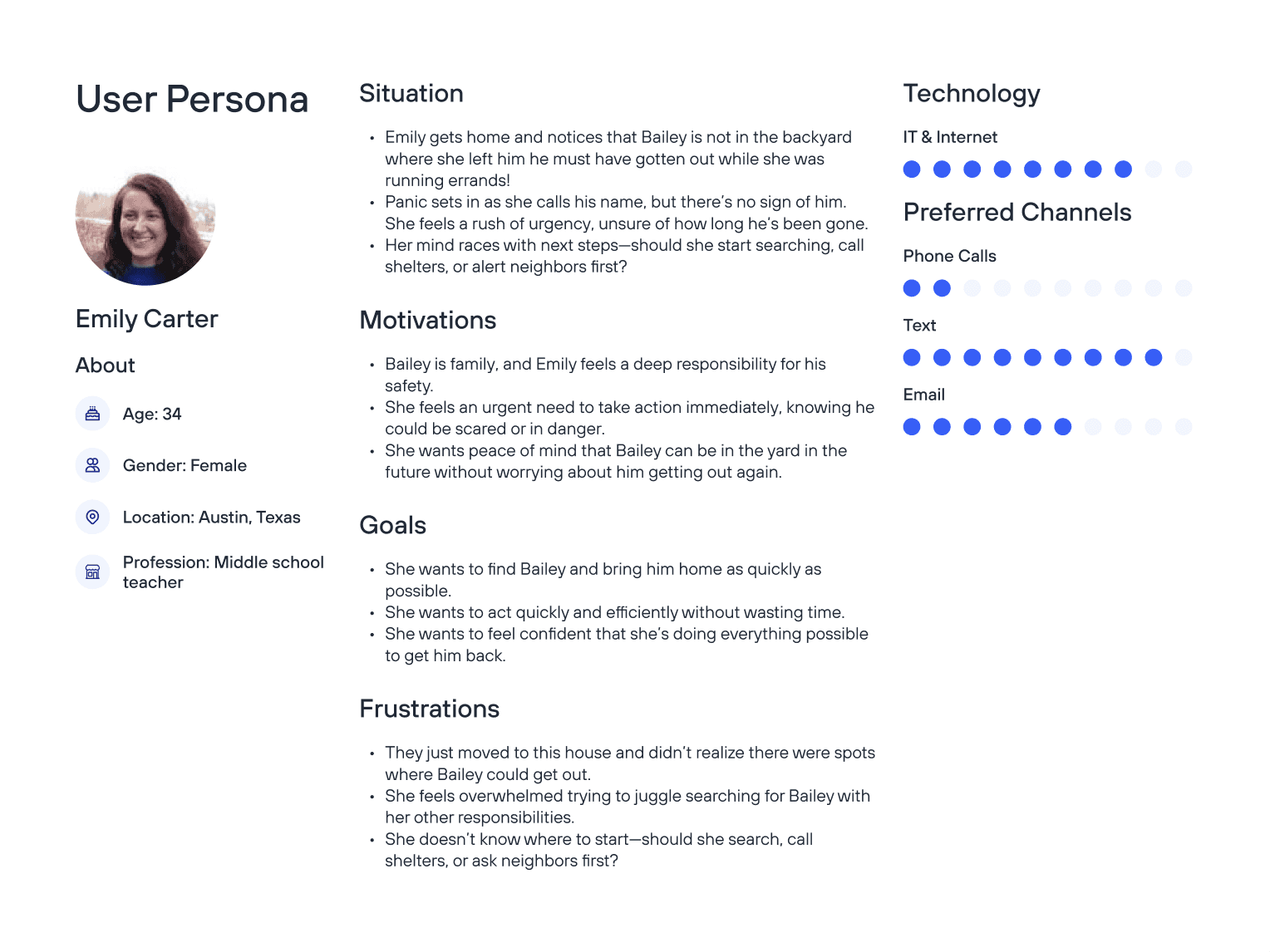
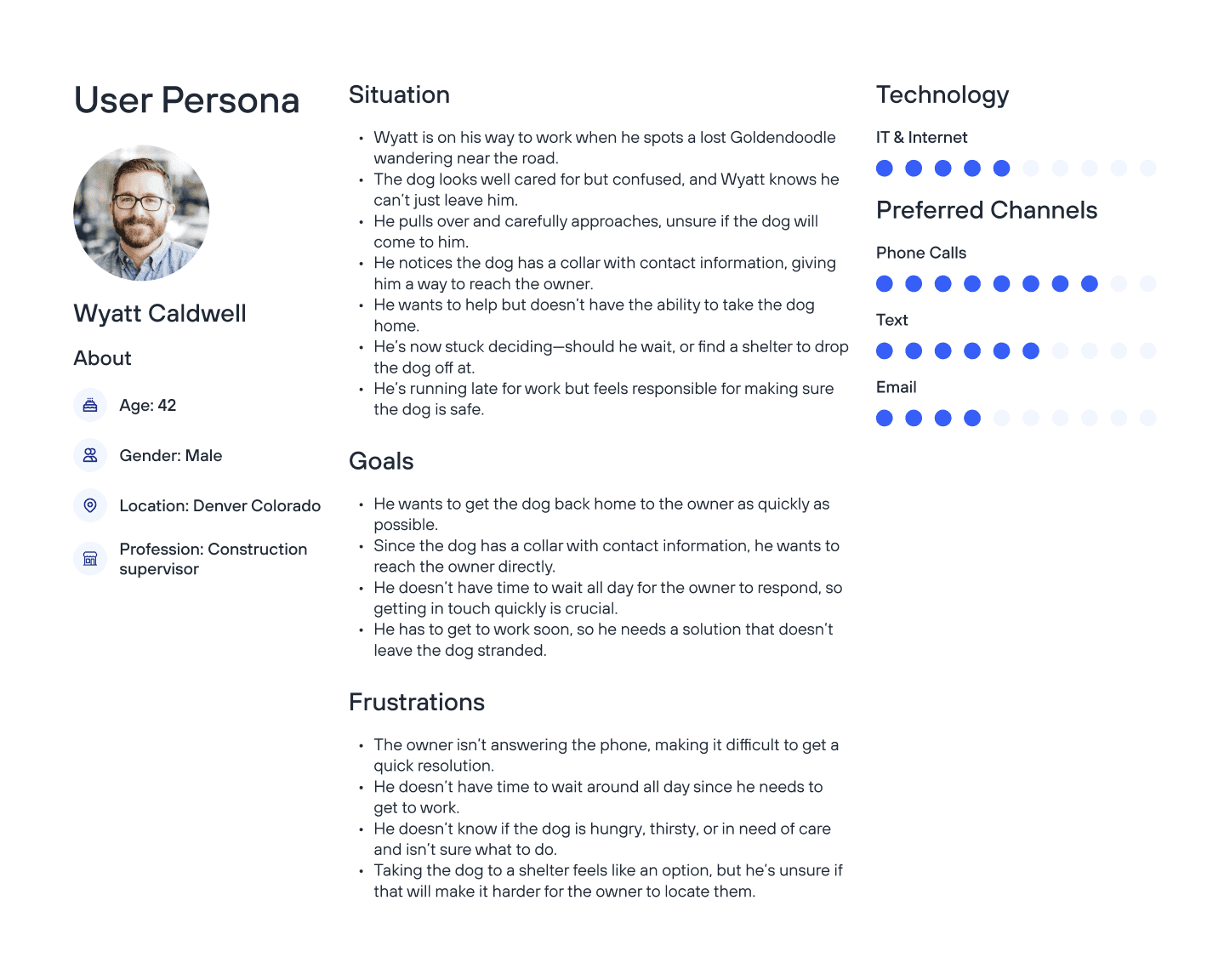
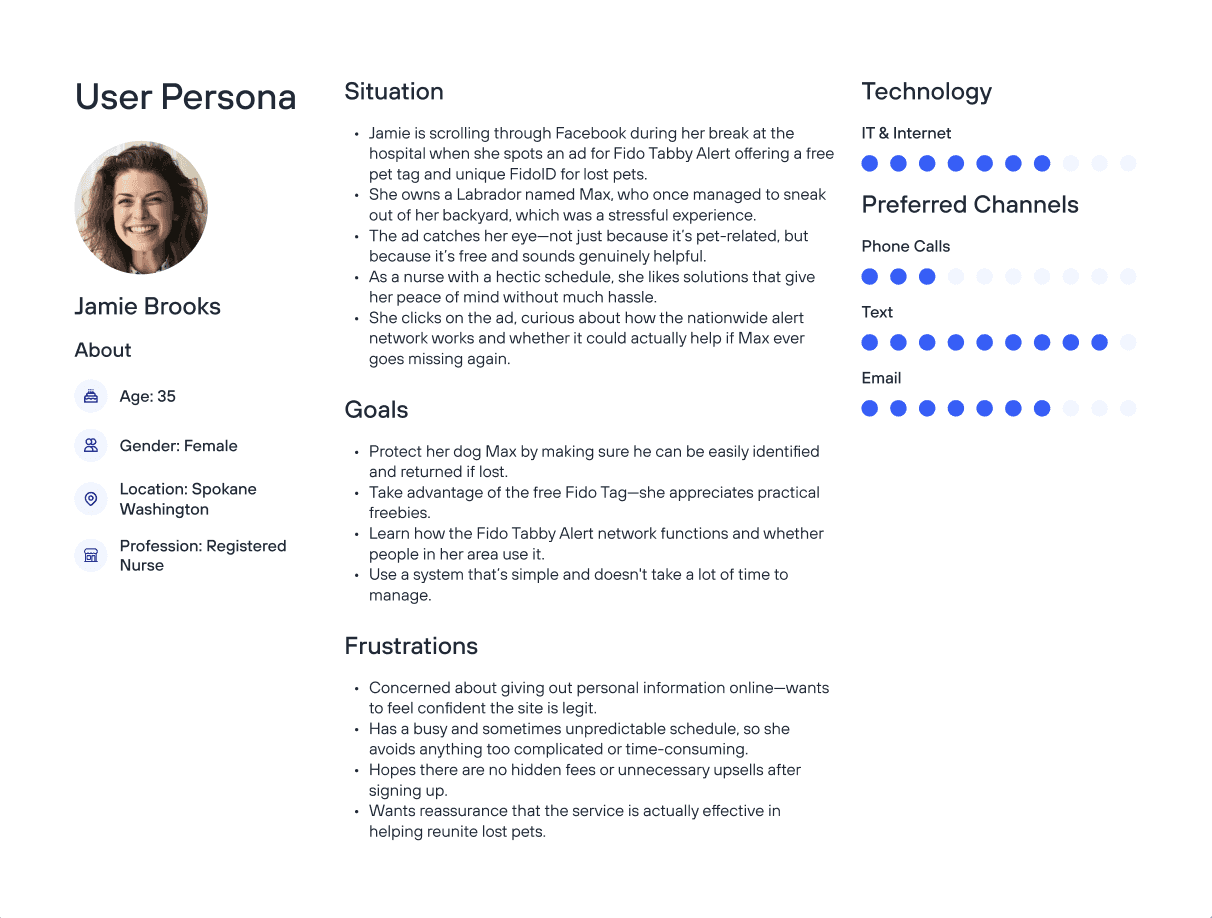
To better understand the diverse needs and emotional contexts of our users, I created four detailed personas. Each represents a different mindset and scenario — from pet owners in high-stress emergencies to proactive first-time pet parents discovering the service through retail channels.

These personas helped guide design decisions, highlight pain points, and ensure solutions were empathetic and inclusive. By grounding the redesign in these user stories, we ensured that each flow — whether for reporting a lost pet or onboarding a new user — truly aligned with real-world needs and behaviors.

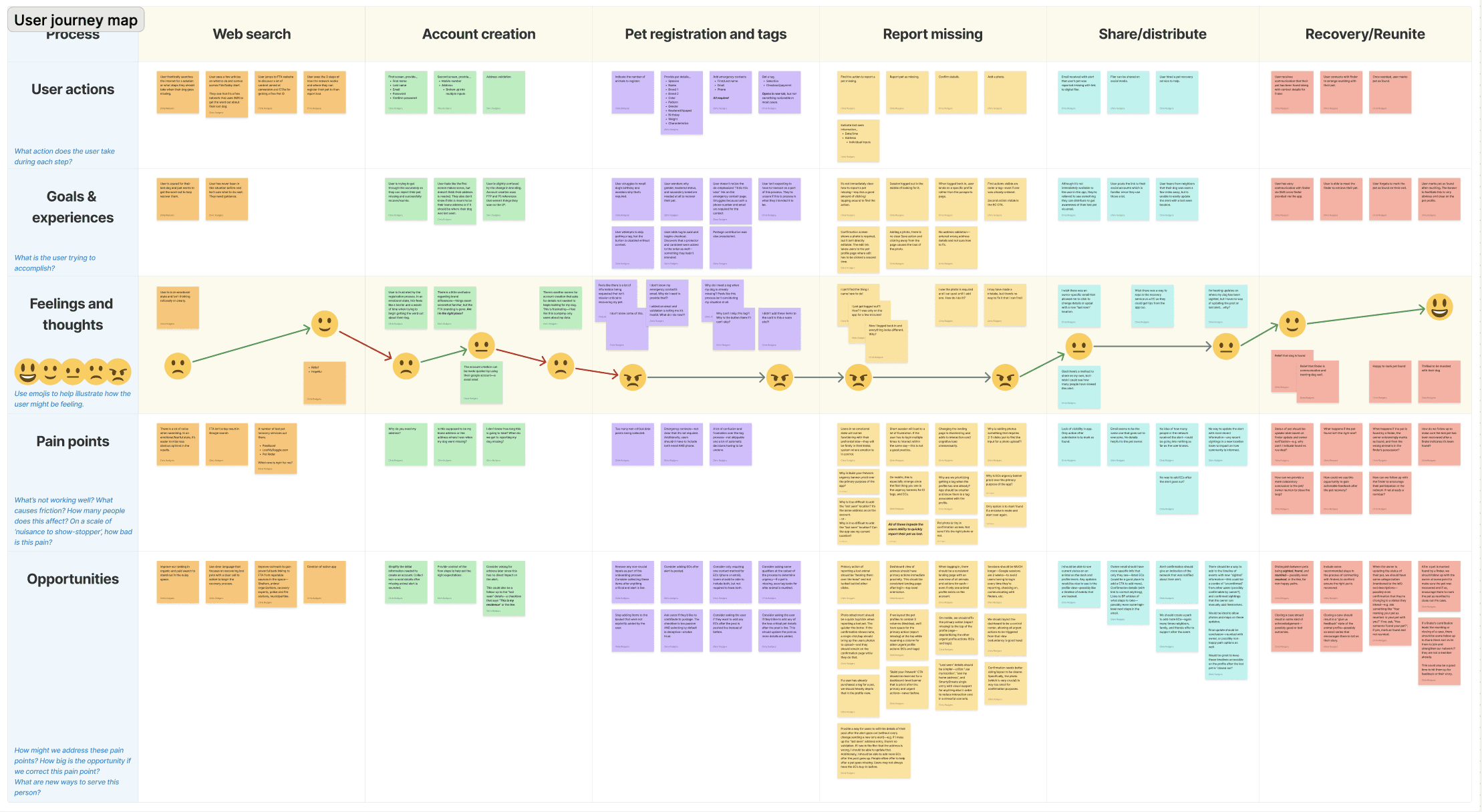
Empathy mapping

Empathy mapping helped uncover deeper emotional drivers and pinpoint moments of friction across the experience. By visualizing what users think, feel, and do, especially during high-stress moments like reporting a lost pet or navigating complex registration flows, I identified hidden pain points and opportunities. These insights directly informed design decisions that reduced anxiety, clarified next steps, and reinforced trust in both urgent and routine scenarios.

Lost animal flow

The journey and empathy mapping revealed where users felt the most stress, hesitation, and friction, from unclear steps and unnecessary data collection to unexpected upsells and lack of emotional closure. Users often felt disoriented during critical actions like reporting a missing pet, struggled to understand next steps, and lacked reassurance throughout. These insights directly shaped simplified and more supportive flows designed to feel faster, reduce stress, and build trust at every stage.
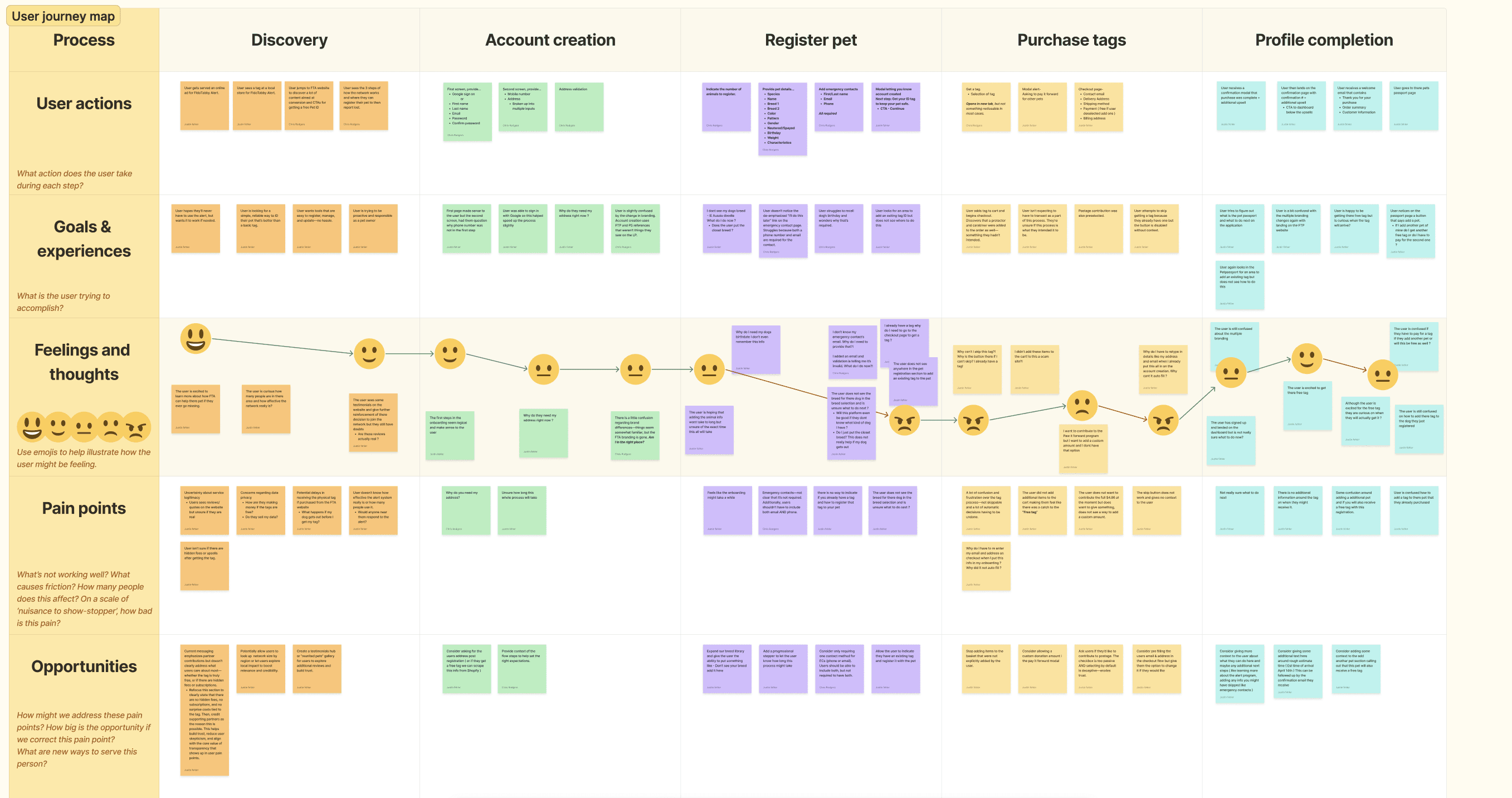
Pet registration

Pet registration empathy mapping surfaced key moments of confusion and frustration, especially around excessive data collection, unclear required fields, and unexpected checkout flows. Users felt overwhelmed by non-critical questions and often doubted whether they were on the right path. By highlighting these pain points, I identified clear opportunities to simplify form fields, defer optional details, and clarify progress, ultimately making the registration experience feel faster, more intuitive, and more supportive.
Empathy mapping

Empathy mapping helped uncover deeper emotional drivers and pinpoint moments of friction across the experience. By visualizing what users think, feel, and do, especially during high-stress moments like reporting a lost pet or navigating complex registration flows, I identified hidden pain points and opportunities. These insights directly informed design decisions that reduced anxiety, clarified next steps, and reinforced trust in both urgent and routine scenarios.

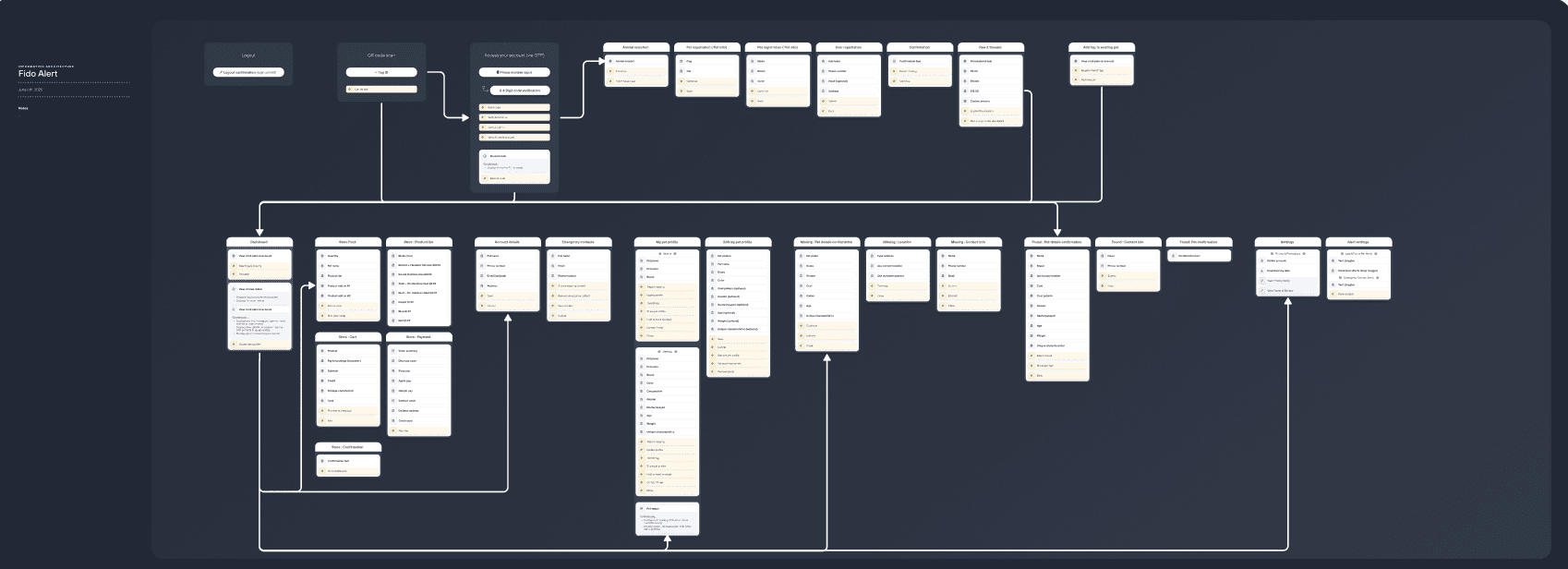
Informational Architecture

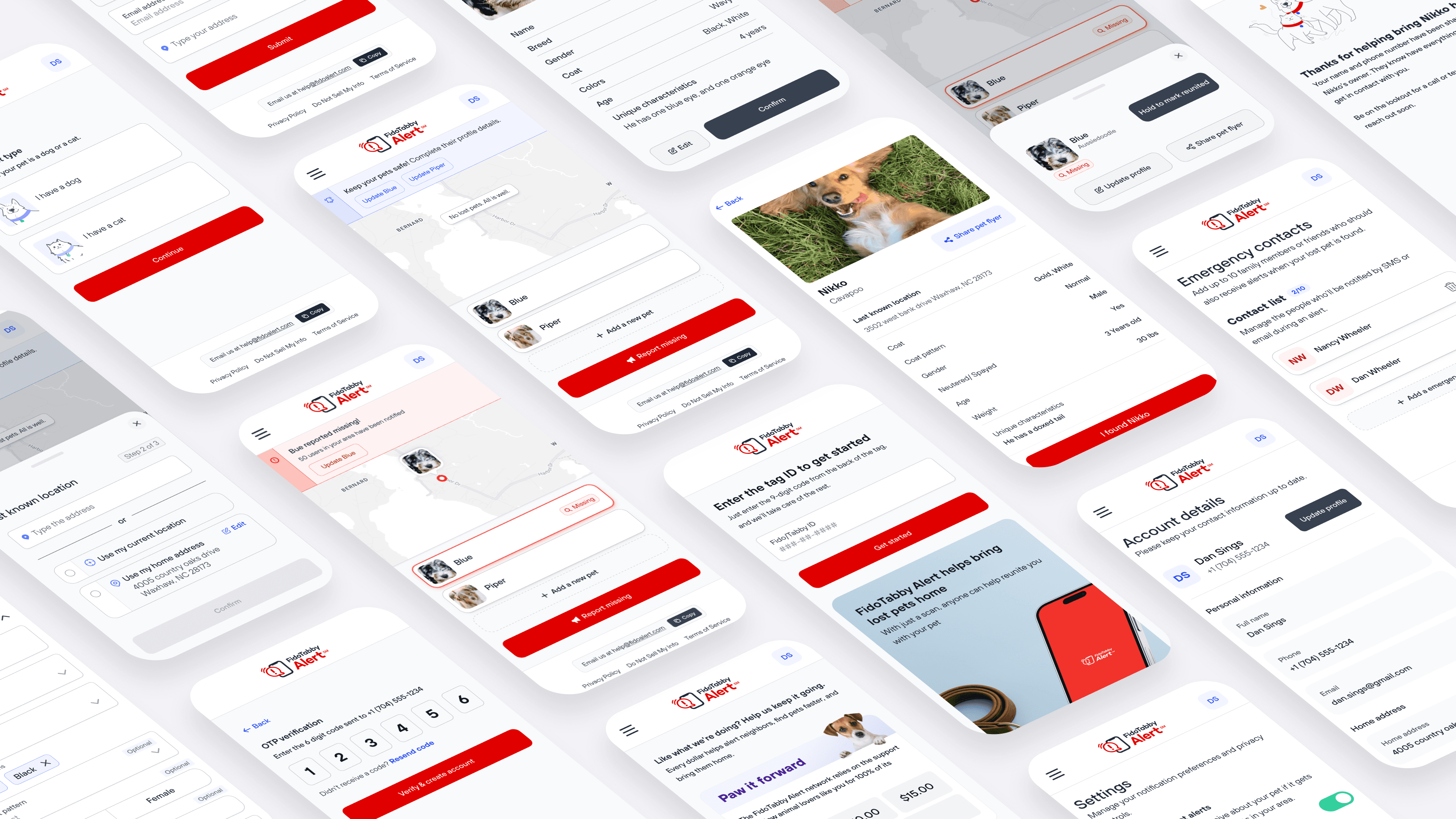
I restructured the information architecture across the entire application, from onboarding through core features, to reduce step count and cognitive load. A key structural change was making “Report Missing” a dedicated primary path, separate from standard account management, so users in high-stress situations could initiate an alert quickly without navigating non-essential settings or secondary flows.
Before & after designs

Before & after designs

Dashboard

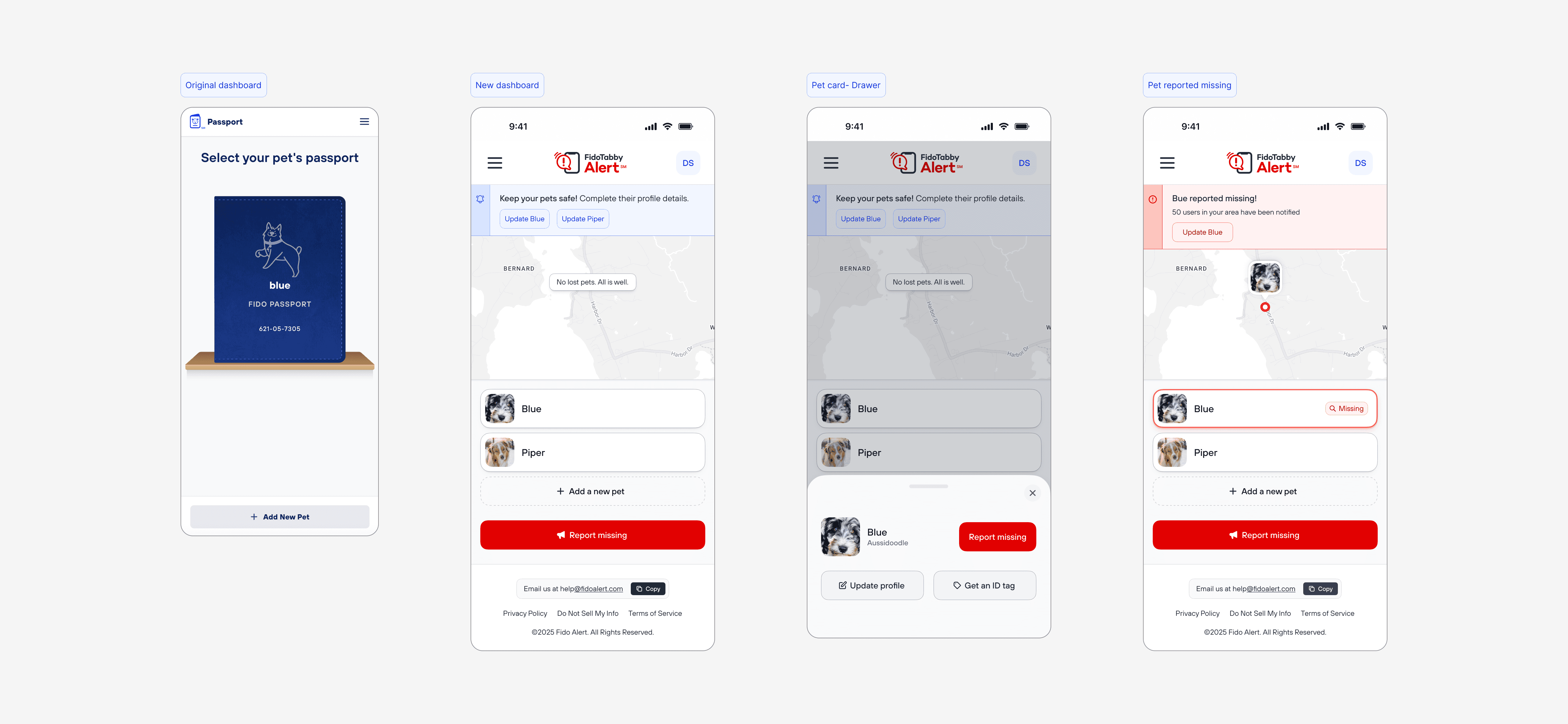
The original dashboard was confusing and didn’t serve as a true starting point for action. Users had no idea what the "passport" concept meant, and inconsistent branding, including different logos and mixed references to Fido Alert, created distrust and hesitation. Important actions like reporting a missing pet or updating profiles were hidden or unclear, making it hard for users to know what to do next.

The redesigned dashboard introduces clear, consistent branding and centers each pet as the primary focus. Critical actions like "Report missing" are now front and center, making them quick and intuitive to access. By aligning visuals, simplifying language, and surfacing key tasks more clearly, the new design empowers users to take action confidently in both urgent and everyday scenarios.
Report a pet missing

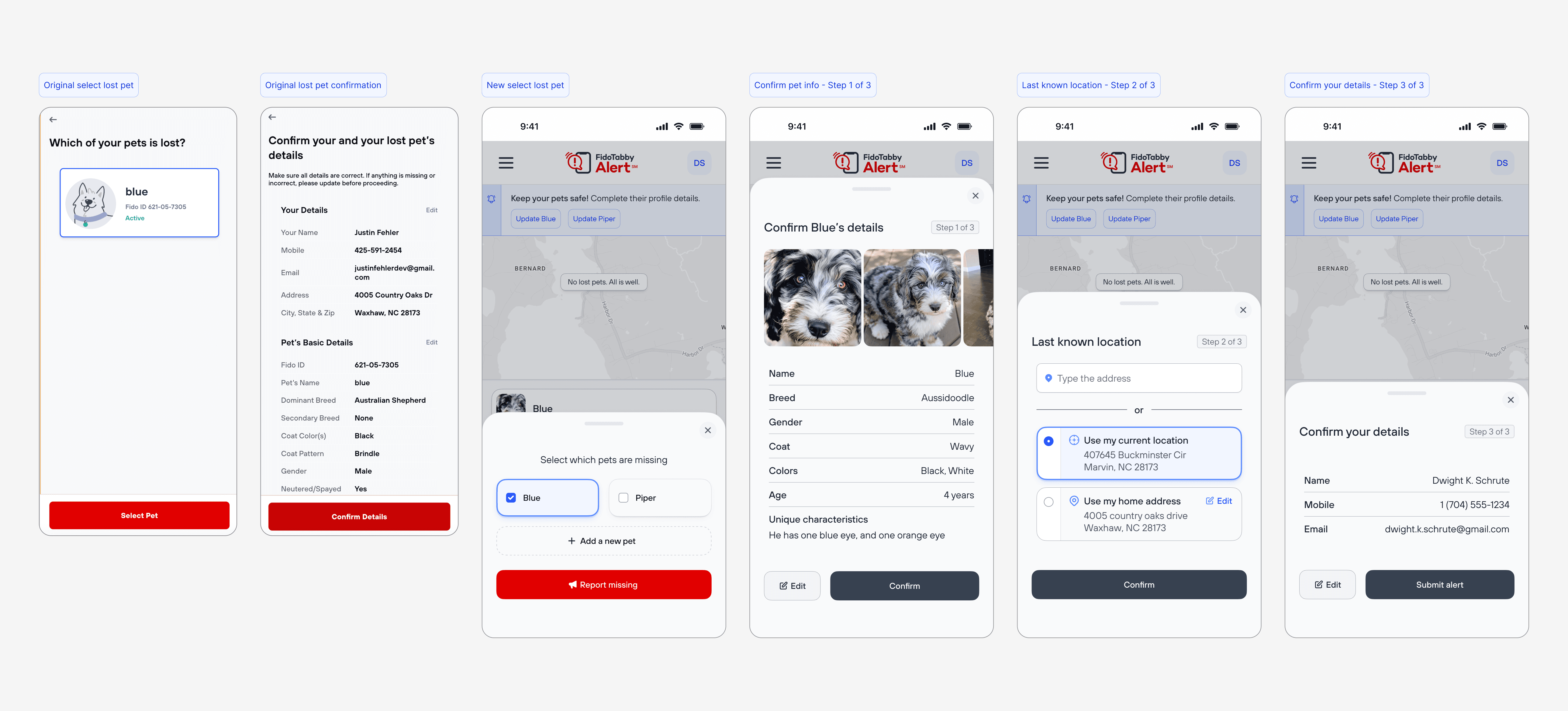
The original design for reporting a missing pet was confusing and unintuitive. Photo editing and uploading required multiple hidden steps, forcing users to scroll and find a separate button without clear guidance on how to complete the action. The process also defaulted to using the home address as the last seen location, which didn’t account for real-world scenarios like traveling or being away from home when a pet goes missing.

The redesigned flow guides users step by step, making it easy to confirm pet details, update or add photos directly within context, and choose the correct last seen location, including using their current location. The new experience reduces confusion, minimizes unnecessary steps, and helps users act quickly and confidently in stressful moments.
Tag registration

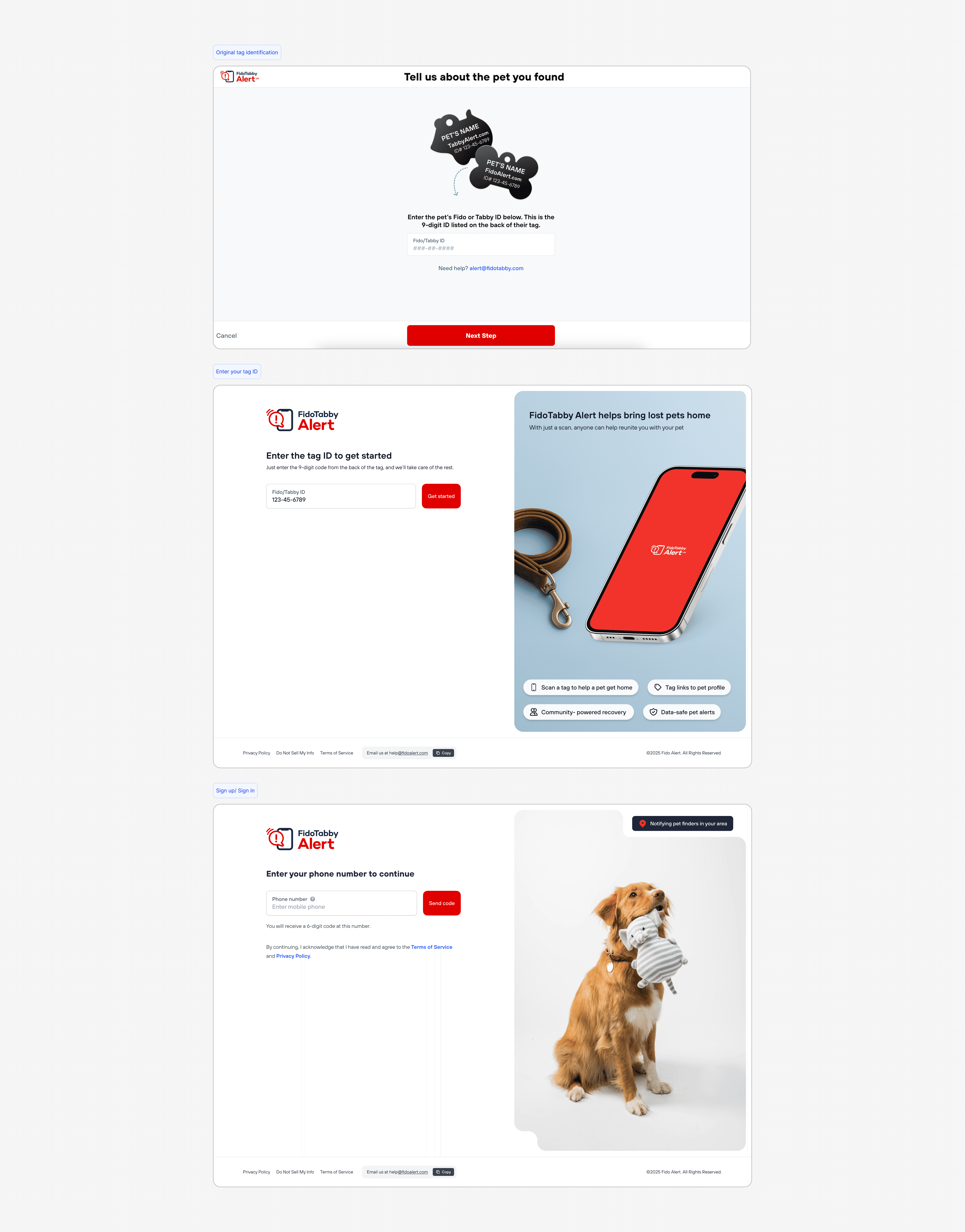
The original tag registration page was designed only for lost pet situations and focused solely on entering a tag ID after scanning. While functional, it lacked context about what Fido Alert is and missed the chance to engage new users, resulting in lost opportunities for growing the network.

The redesigned experience supports multiple scenarios: someone finding a lost pet and scanning the tag, or a user buying a tag in-store and registering it to a new or existing pet profile. The new design better explains the Fido Alert platform, highlights the benefits of community-powered recovery, and encourages people to add their own pets after helping return a lost one. This more flexible and informative approach builds trust, invites participation, and strengthens the overall network.
Learning

This project reinforced the importance of designing for both emotional and practical needs, particularly in high-stress situations like reporting a missing pet. I learned how even small points of friction or unclear steps can quickly erode trust and slow action when users are already under emotional strain. Prioritizing clarity, hierarchy, and supportive guidance helped create an experience that not only enabled confident action in the moment but also strengthened long-term trust in the product.

User personas

To better understand the diverse needs and emotional contexts of our users, I created four detailed personas. Each represents a different mindset and scenario - from pet owners in high-stress emergencies to proactive first-time pet parents discovering the service through retail channels.

These personas helped guide design decisions, highlight pain points, and ensure solutions were empathetic and inclusive. By grounding the redesign in these user stories, we ensured that each flow -whether for reporting a lost pet or onboarding a new user - truly aligned with real-world needs and behaviors.

User personas

To better understand the diverse needs and emotional contexts of our users, I created four detailed personas. Each represents a different mindset and scenario - from pet owners in high-stress emergencies to proactive first-time pet parents discovering the service through retail channels.

These personas helped guide design decisions, highlight pain points, and ensure solutions were empathetic and inclusive. By grounding the redesign in these user stories, we ensured that each flow -whether for reporting a lost pet or onboarding a new user - truly aligned with real-world needs and behaviors.